Xth Sense: Wearable Biosensors


The "Xth Sense™" is a new type of wearable musical instrument. It consists of wearable bionsensors that track muscle contraction and movement, and converts this information into sound and visuals. Caselden Studios developed the first wireless version of this invention for dancers in an interactive multi-media performance, RADICAL: Signs of Life, directed by Heidi Biosvert.

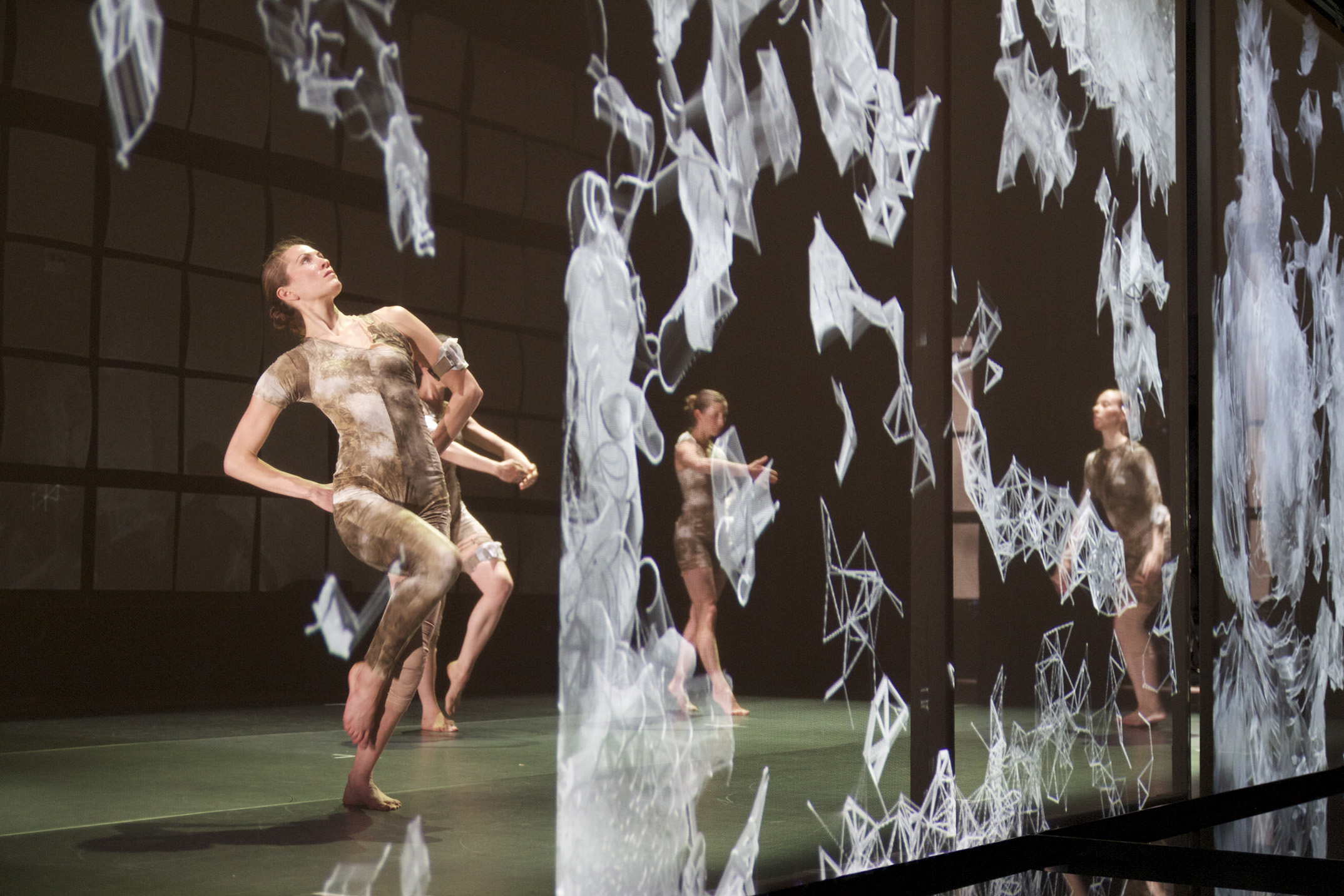
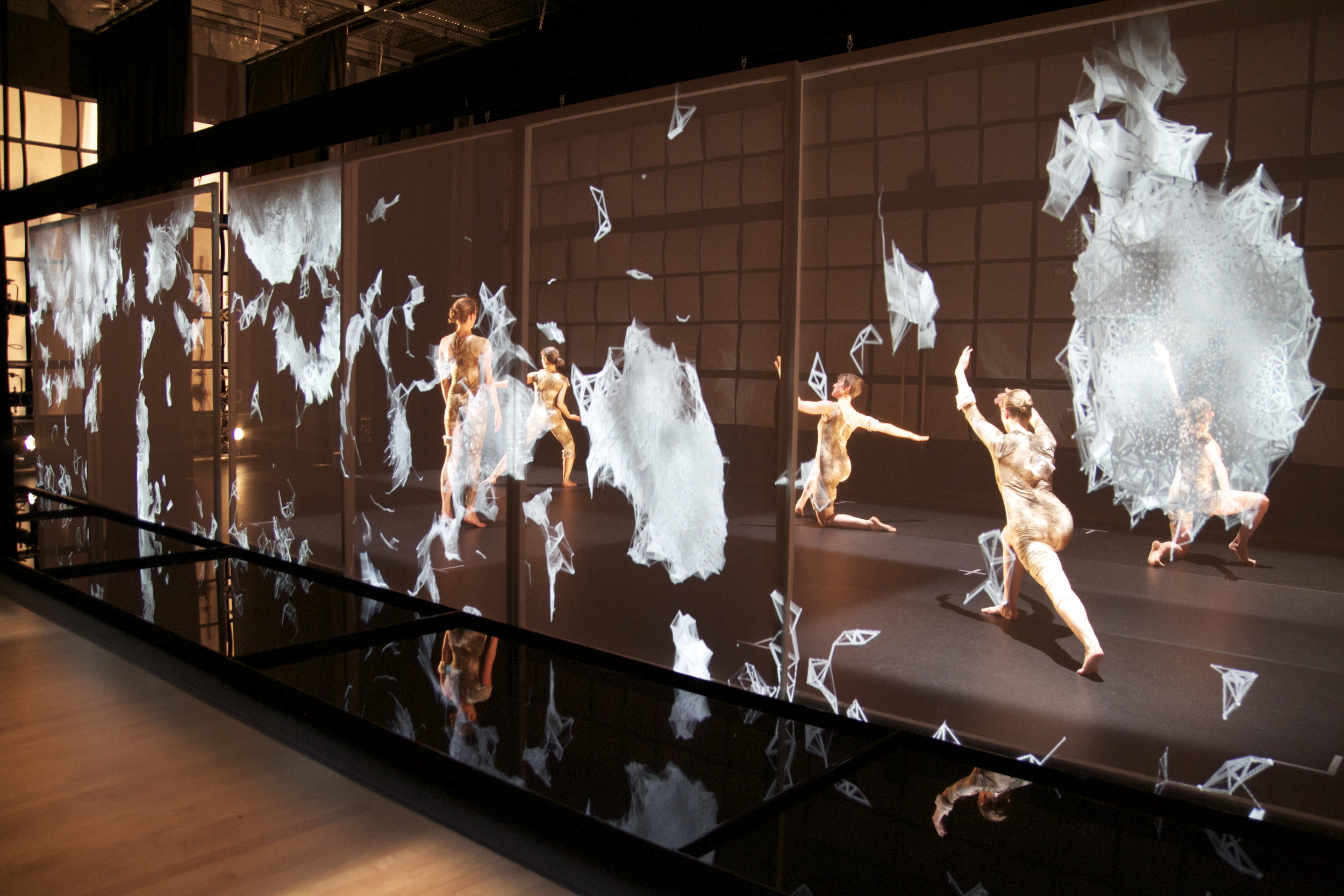
Dancers wearing the Xth Sense designs in a performance. The projected visuals and audio come from biosignals detected by the wearables.

Dancers wearing the Xth Sense designs in a performance. The projected visuals and audio come from biosignals detected by the wearables.


Participants attach the sensors to their body. The Xth Sense will work with any muscle. In the photo to the left, dancers have attached the device to their arms and legs.

How Does it Work?

As the participants move, muscles contract, creating vibrations. These vibrations are referred to as MMG, or mechanomyogram signals. The Xth Sense detects these vibrations, and transmits the signal through the air to laptops, where they generate sound and visual projections. Here is a video of dancers in action using the sensors:

 
[radical] signs of life *An interactive, multi-media performance generated from dancers' muscles and blood flow. Premiere: May 3rd and 4th, 2013 @ EMPAC (Studio 2) Cover photo by: Marco Donnarumma [NOTE: This is not the official excerpt.] Conceived and Directed by: Heidi Boisvert Choreography: Pauline Jennings Sound Design: Doug Van Nort Set and Lighting Design: Allen Hahn Visual Design: Raven Kwok Costume Design: Amy Nielson Sensor Design and Development: Marco Donnarumma Wireless network and custom armband development: MJ Caselden and Krystal Persaud The responsive choreography for the hour-long performance was composed in real-time by five dancers from a shared movement database in accordance with pre-determined rules. Outfitted with two wireless sensors each, the dancers--Jennifer Mellor, Ellen Smith Ahern, Hanna Satterlee, Avi Waring and Willow Wonder--created patterns that dissolved from autonomous polyrhythms to intersecting lines as they sliped through generative video and light. Van Nort improvised original multi-channel electroacoustic music live with new interactive sound instruments based on the Donnarumma's XS technology to sculpt a dense web of complex texture and emotion around the audience. The dance performance evolved through three levels of self-organizing systems choreographically, which were mirrored visually and sonically. 1. Conway: In the first game level, dancers can be seen participating in an adaptation of Conway's Game of Life, which dictates survival between states of loneliness and starvation. As individual movement triggers fellow dancers to move throughout the space, dancers collide within territories marked by tape. These collisions may result in the starvation of fellow dancers and the game level ends when one dancer survives. 2. Hebb: Each dancer begins level 2 with an individual goal and trajectory through the space. As dancers begin to meet fellow dancers along their trajectories, unions begin to form. As these bonds strengthen, dancers begin navigating their trajectories as partners and eventual as a group. To win the level, a community of 5 dancers must be formed. 3. Markov: The dancers begin this last level building upon the cohesion developed during level two, but with the challenge of not being permitted to travel outside of their level 1 territories. The group explores dynamics of leadership until a clear director temporarily emerges, resulting in the degradation back into the power struggles of Level 1. "[radical] signs of life" was produced, in part, at Harvestworks with funds from the Rockefeller Foundation’s New York City Cultural Innovation Fund and the National Endowment for the Arts. The work was made possible through generous support from the Rensselaer Arts Department along with iEAR Studios, and EMPAC staff. Rehearsal space was granted by an Artistic Residency at the Contemporary Dance and Fitness Center in Montpelier, Vermont.


Our Role:

Artist Marco Donnarumma approached us with the first prototype, and asked us to produce a wireless version for the performance. Caselden Studios developed a wireless version of the design, delivering custom firmware, wearable embedded systems, circuit design for the sensors, and PCB fabrication for batch production. We also contributed to the spatial layout of electronics across bodies, ensuring that the designs were dancer-appropriate.

The design and event was so successful that the two leading artists have developed this technology into a product, and launched a company called Xth.io


Credits


Xth Sense Design + Engineering

Electronics, PCBs, Firmware, Wireless Transmission: Caselden Studios

Sensor Design + Interaction Design: Marco Donnarumma
Industrial Design: Krystal Persaud

Wearable Design: Heidi Boisvert, Krystal Persaud, Caselden Studios, Amy Nielson


[Radical] Signs of Life Performance Production

Concept and Direction: Heidi Boisvert
Choreography: Pauline Jennings
Dancers: Jennifer Mellor, Ellen Smith Ahern, Hanna Satterlee, Avi Waring and Willow Wonder

Sound Design: Doug Van Nort
Set & Light Design: Allen Hahn
Visual Design: Raven Kwok
Costume Design: Amy Nielson